Tube direction mismatch
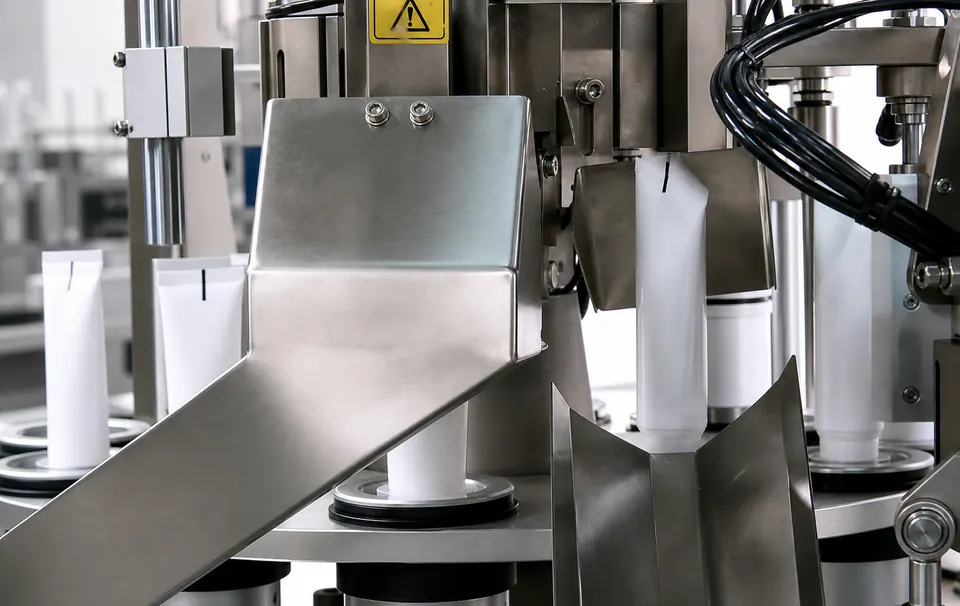
If tube tails face different directions in the magazine, orienting and mandrel insertion become unstable. FPM checks the real tube stack before designing the feed rail.
 Turnkey Tomato Paste & Ketchup Filling Lines
Container & Closure Adaptation
Composite or plastic tomato ketchup squeeze tubes.
Format Adaptation Details
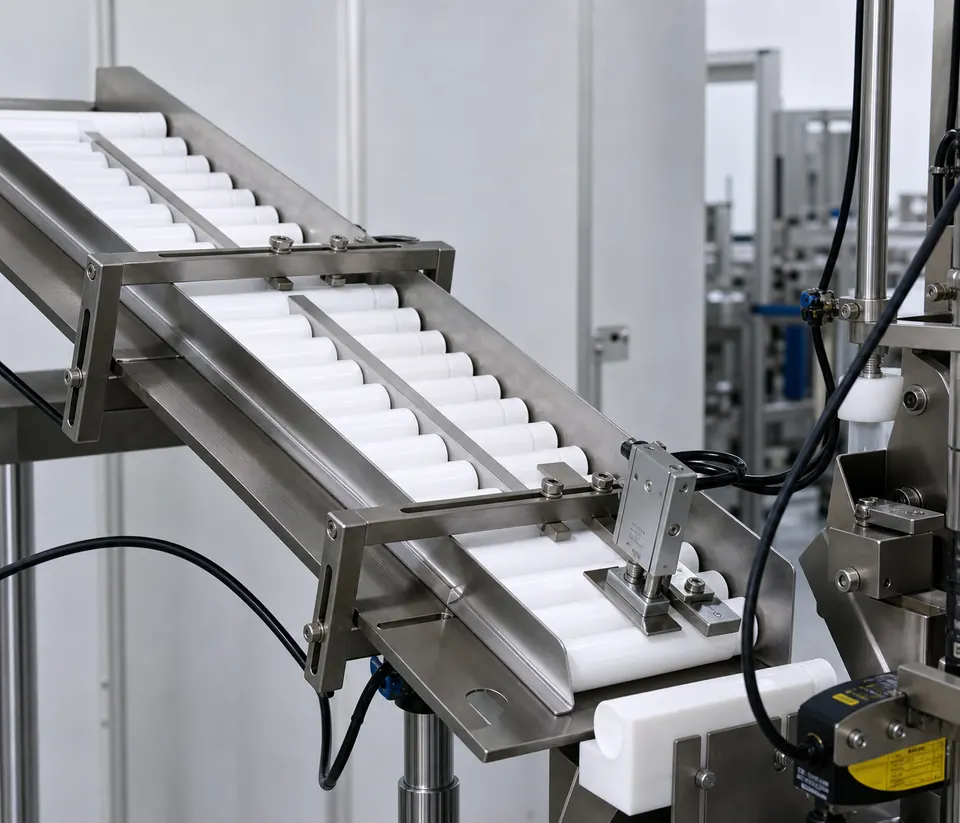
Format Adaptation Details
Composite or plastic tomato ketchup tubes requiring tube magazine feeding, mark alignment, bottom filling, heat sealing, tail trimming, and discharge.
Squeeze Tube
Tube magazine, tube orienting, mandrel holders, tail sealer, tail cutter
Empty tube sample with tail opening, registration mark, cap side and wall stiffness
Ketchup, tomato sauce, chili tomato sauce, and paste-like sauces that need squeeze-tube retail packs.
Filling starts from the open tube tail. Nozzle stroke, suck-back and gas displacement must match the tube wall stiffness.
Heat sealing replaces capping as the critical closure step. Tail material, wall thickness and embossing depth decide seal quality.
The tube artwork and black mark must be read before filling so the finished seal and front panel stay aligned.
At least 200 empty tubes, cap-side photos, tail opening photos, black-mark position, and 5L of real ketchup or sauce sample.
Packaging Line Risks
If tube tails face different directions in the magazine, orienting and mandrel insertion become unstable. FPM checks the real tube stack before designing the feed rail.
Tube artwork must stop at a repeatable angle before filling and sealing. Photoelectric mark reading and rotary holder indexing are checked together.
Heat, pressure, dwell time and trimming position decide whether the tube leaks or looks rough after packing.
Engineering Response
Empty tubes are stacked with tail openings facing one direction before single-row feeding.
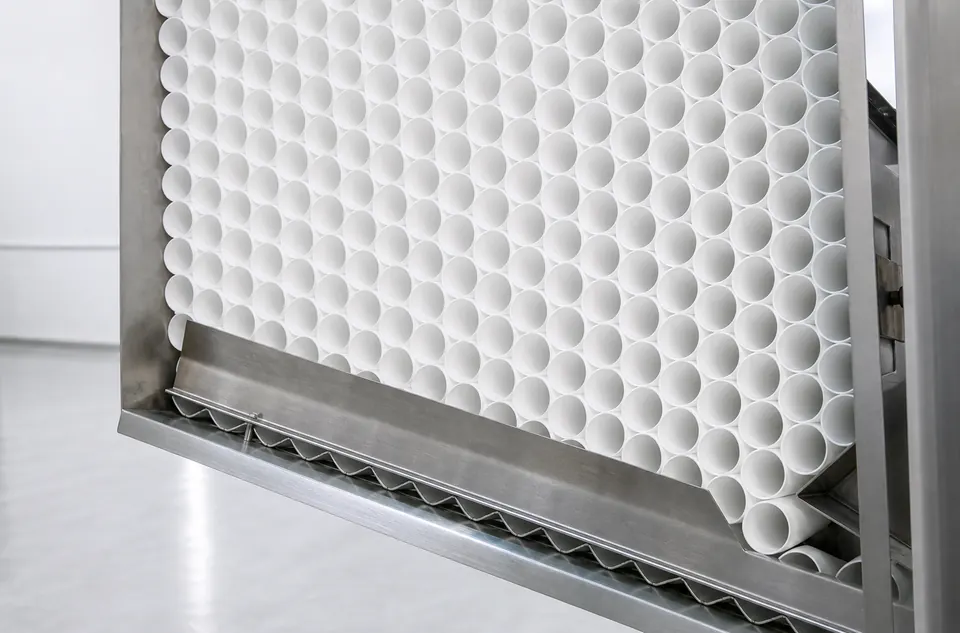
The lower feeding track separates tubes into a controlled single row.
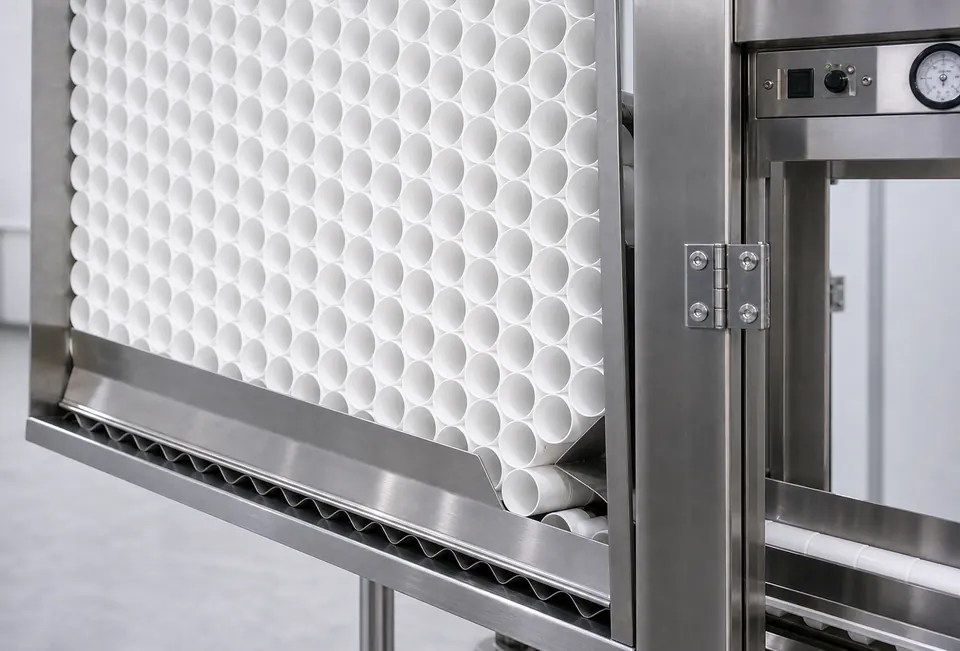
The tube is turned upright and inserted into the rotary table holder.
A sensor reads the tube mark while the holder rotates the tube into the sealing reference angle.
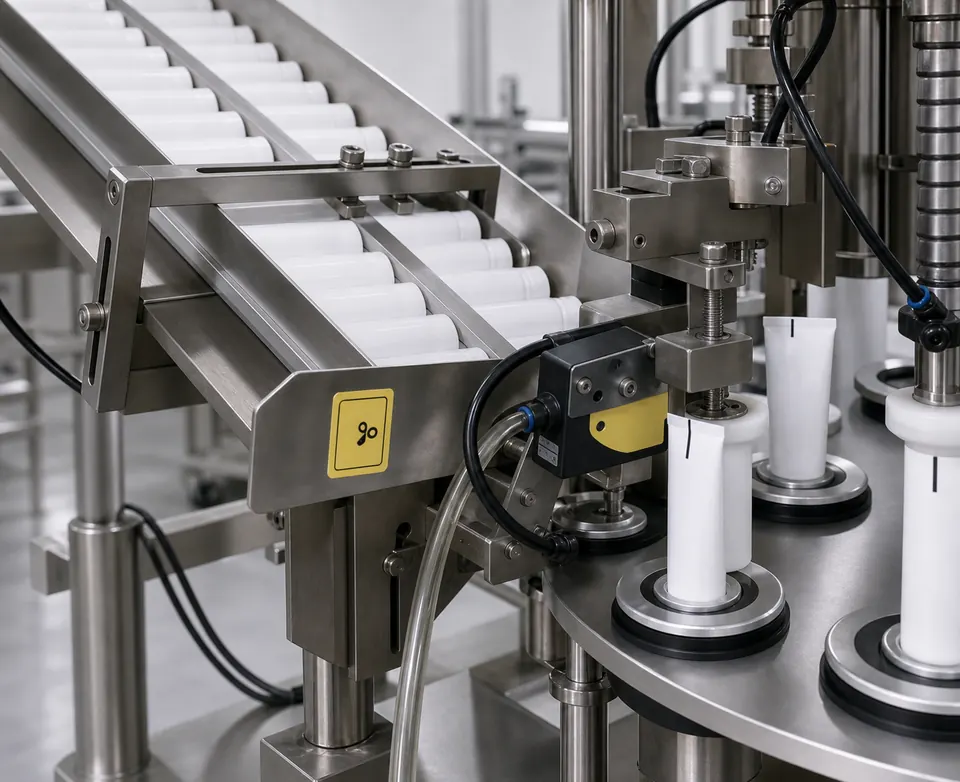
After alignment, inert gas can be introduced through the tube opening before dosing.
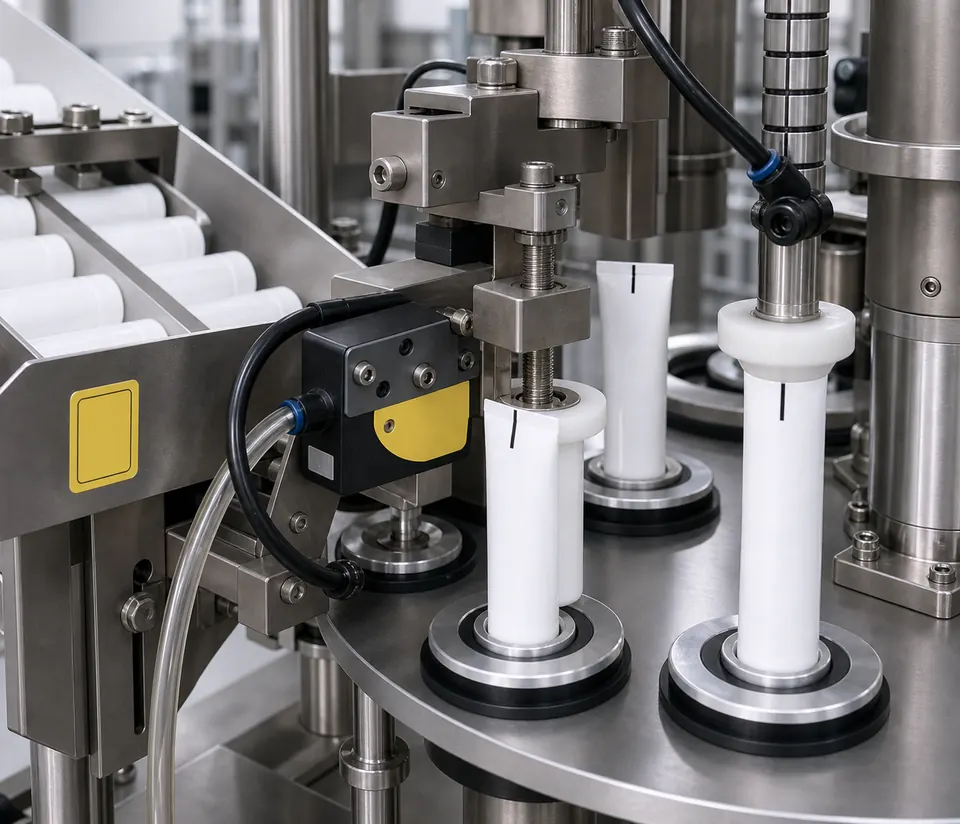
Ketchup is filled from the open tail end, then the inner tail surface is heated for sealing.
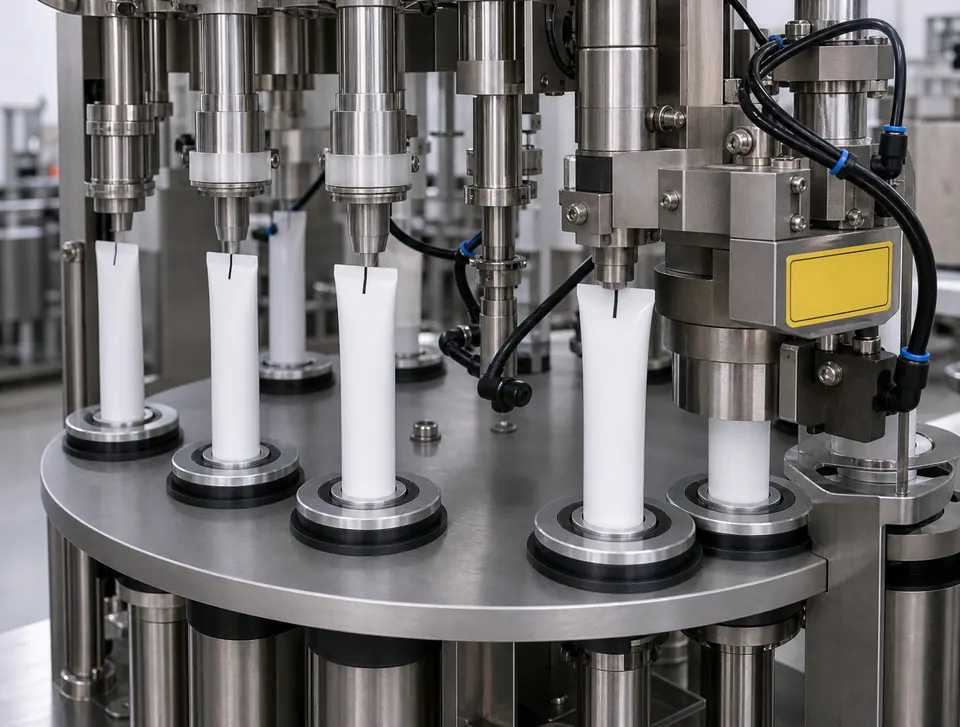
The heated tail is pressed shut; date or batch embossing can be added when required.
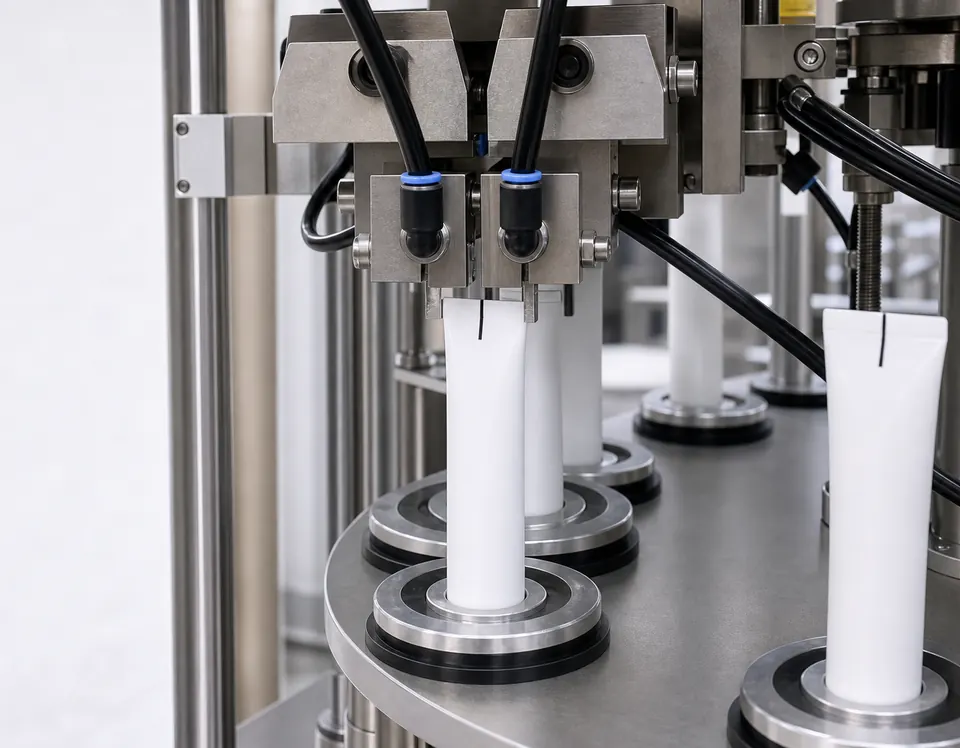
The sealed tube tail is trimmed to remove burrs and keep a clean retail edge.
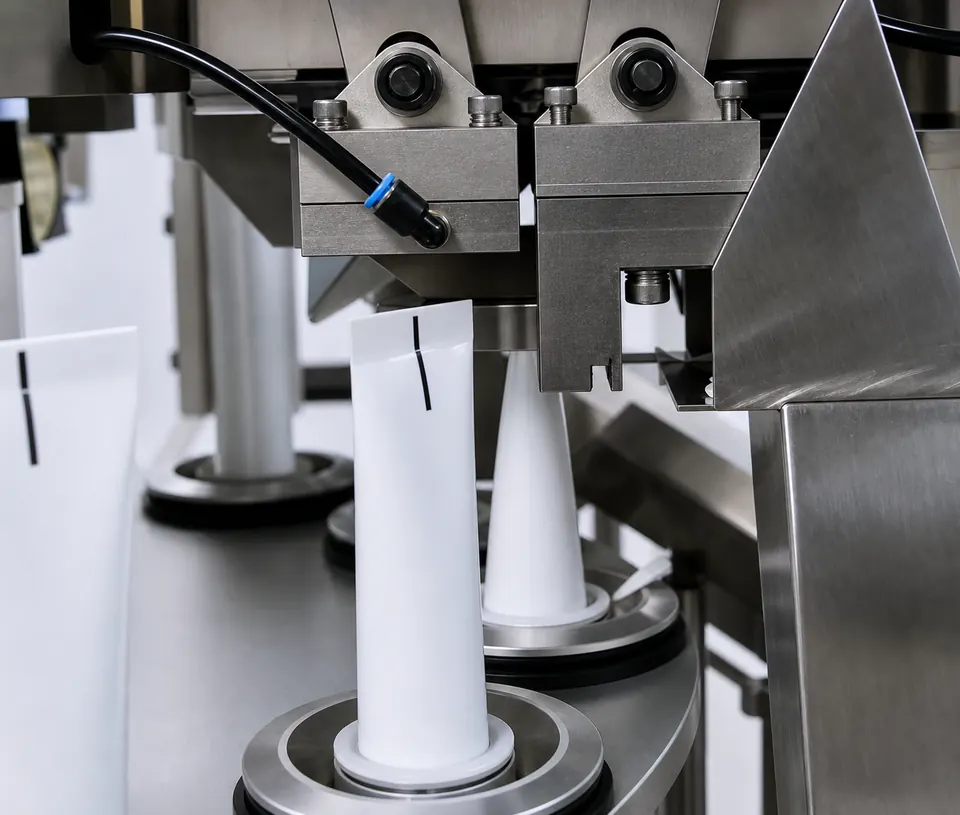
The holder releases the finished tube and transfers it to the discharge slide.
Send clear photos or samples of the bottle mouth, cap liner, filled product and current line. FPM will first confirm whether the sample can run steadily.
Upload Samples and Photos