Glass thermal shock fractures
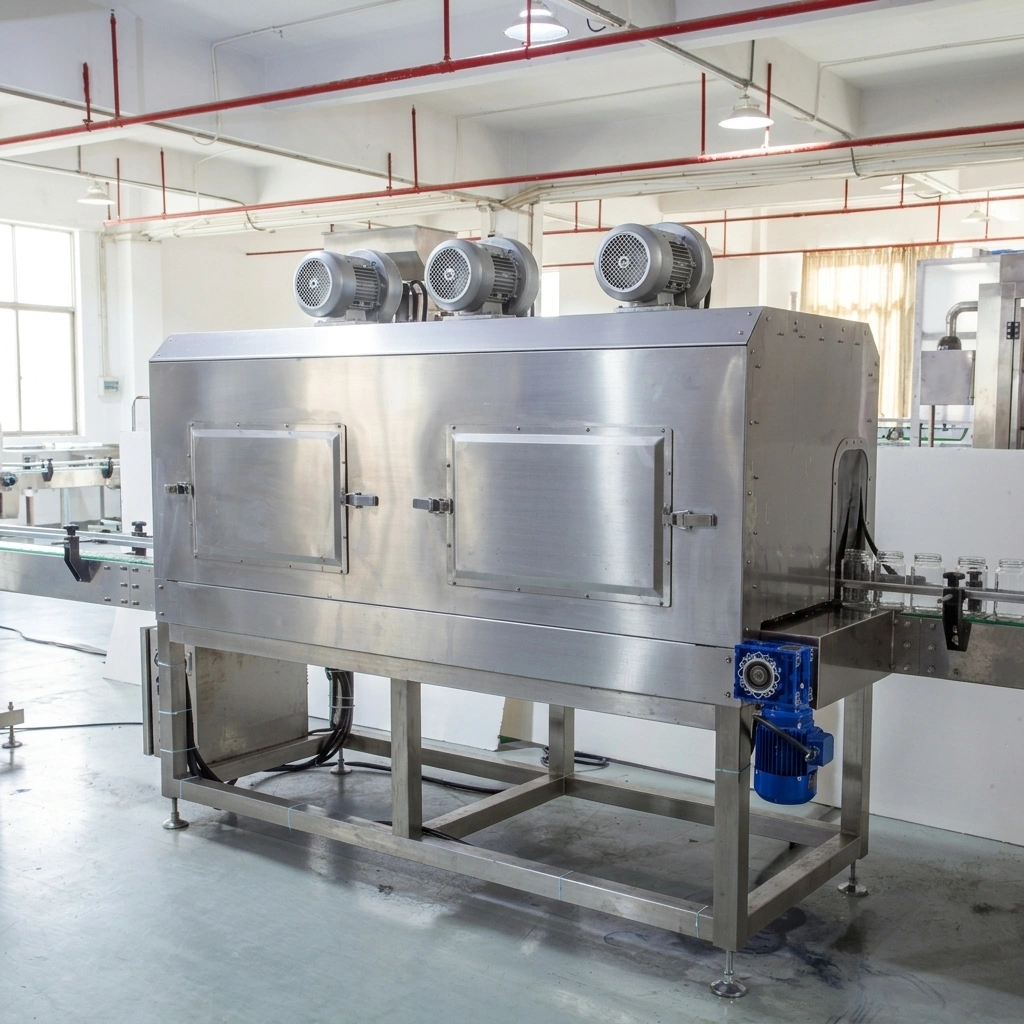
Filling hot tomato paste (85°C) into cold glass jars causes thermal shock. FPM pre-heats jars inside an integrated tunnel.
 Turnkey Tomato Paste & Ketchup Filling Lines
Process Technology Profile
Acidic hot-fill tomato paste and ketchup route.
Engineered for high-temperature sanitary dosing, thermal-shock resistance, and high-vacuum sealing using food-grade SUS316L contact components.
Application Fit Overview
High Viscosity (120,000 cps)
Twist-Off Cap
80°C - 85°C (Hot-fill pasteurization)
Metal Twist-Off (TO-66 / TO-82)
Production Risks & Controls
Filling hot tomato paste (85°C) into cold glass jars causes thermal shock. FPM pre-heats jars inside an integrated tunnel.
Tomato paste is highly acidic, degrading standard metals. FPM builds all product contact surfaces from food-grade SUS316L.
Rapid cooling after hot fill deforms thin glass jars. FPM capping chambers regulate steam vacuum pressure settings.
Engineering Pre-Diagnosis
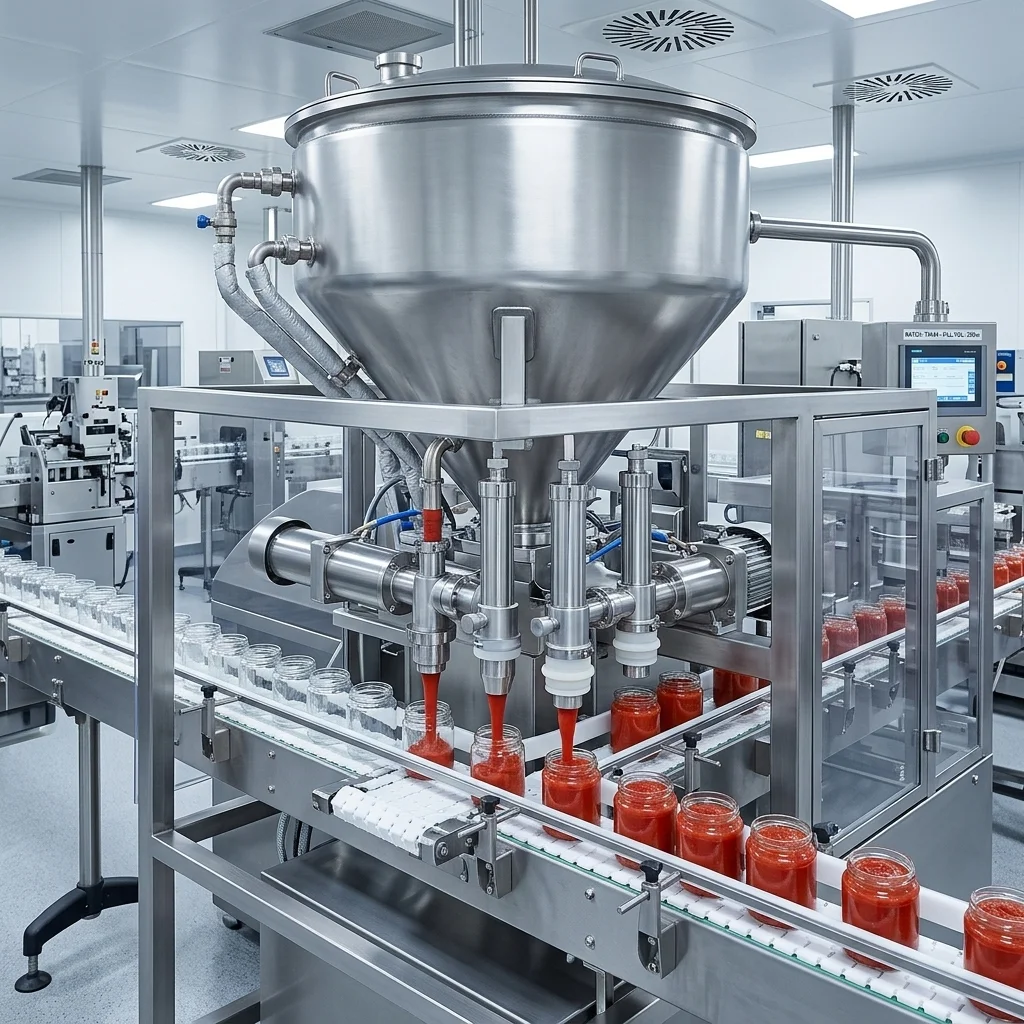
Tomato paste (36-38% Brix) exhibits high viscosity and non-Newtonian flow behavior after reconstitution. A double-jacketed heated hopper and large-bore piston cylinders are required to prevent sedimentation. Filling nozzles must feature active pneumatic suck-back to prevent tail dripping onto bottle threads.
Classic 500g wide-mouth glass jars (GOST 5717.2 compliant) are prone to thermal shock fractures. FPM turnkey lines must integrate a steam pre-heating tunnel before the filling block to warm jar walls above 60°C, eliminating cracking hazards under 85°C hot-fill.
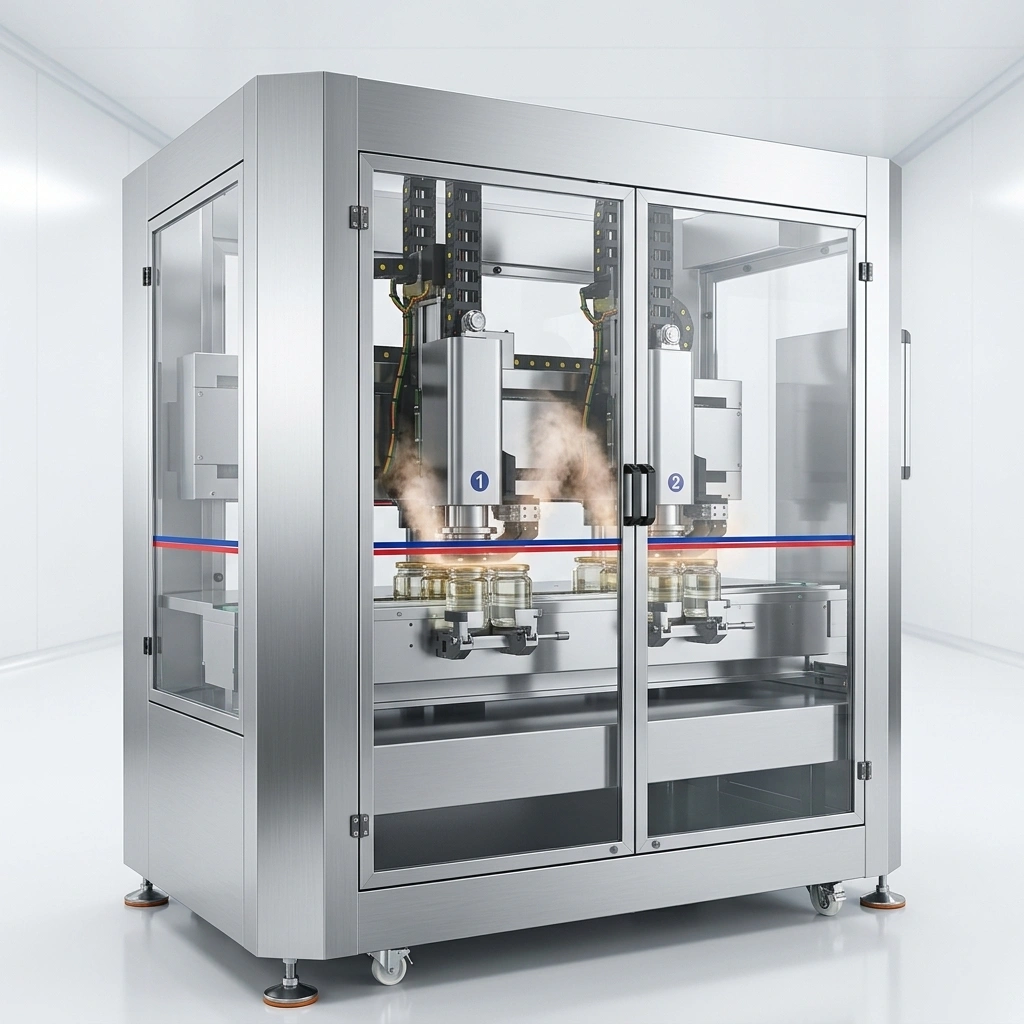
Sealed with Twist-Off metal caps (TO-66 or TO-82). Preservative-free paste relies on high vacuum for shelf stability. The capper must inject superheated steam to displace air, ensuring residual vacuum exceeds 0.04 MPa and safety buttons drop post-cooling.
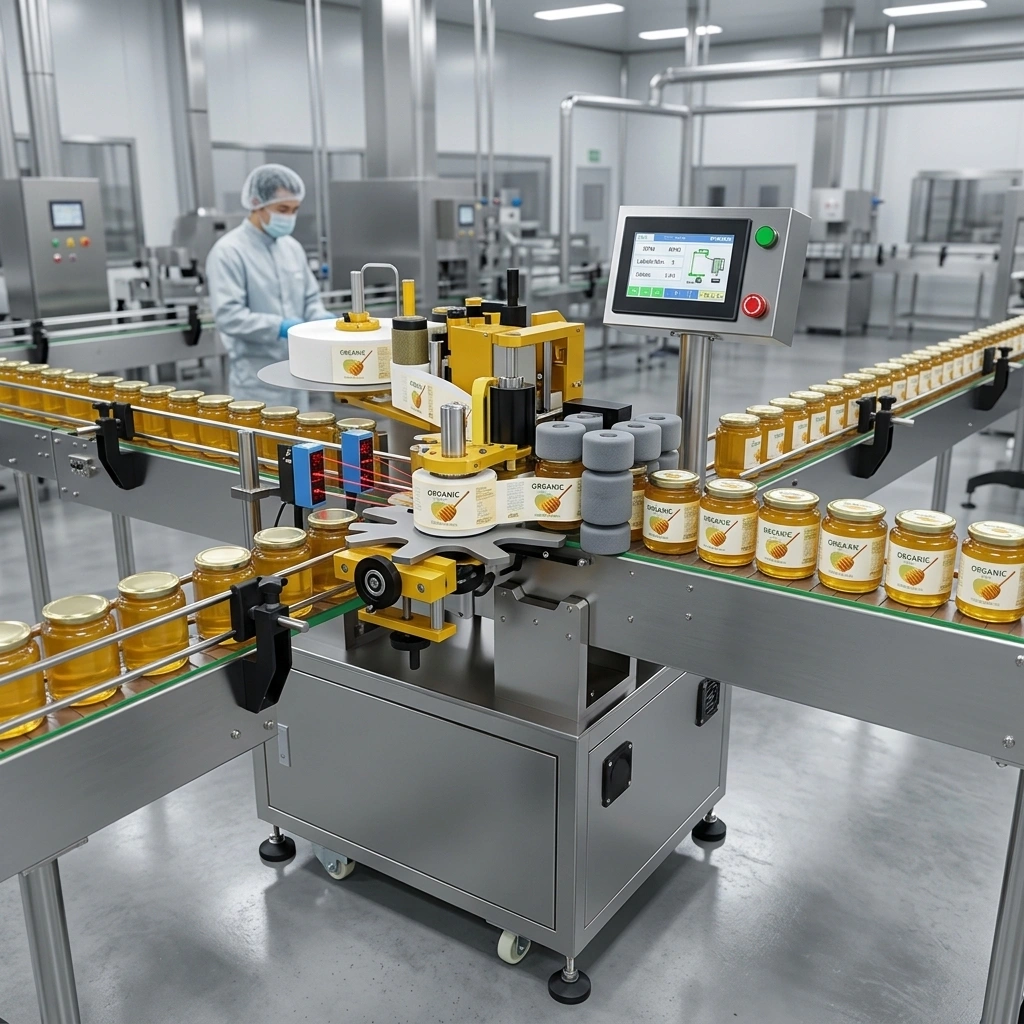
Jars discharging from hot-fill display heavy condensation. Downstream stages must integrate a graduated cooling tunnel and high-velocity laminar air knives to dry jar surfaces. Otherwise, cold glue labeling will bubble/peel, and inkjet coding will smudge on wet glass.
System Architecture
Pre-heating tunnels raise glass temperature to prevent cracking under hot filling.
Volumetric piston system with continuous circulation path maintains paste temperature.
Tomato Paste Turnkey Filling Production Line
Controlled steam injection establishes airtight vacuum seals for hot food jars.
Graduated shower zones cool products down to ambient levels prior to labeling.
Production Packaging Showcase
Provide product parameters or ship samples to FPM. Our engineers will perform flow trials and issue a formal engineering audit report.
Request Application Audit